Table Of Content

Spiders have developed several different respiratory anatomies, based either on book lungs or on tracheae. Mesothele and mygalomorph spiders have two pairs of book lungs filled with haemolymph, where openings on the ventral surface of the abdomen allow air to enter and oxygen to diffuse in and carbon dioxide to diffuse out. This system has most likely evolved in small ancestors to help resist desiccation.
A Spider’s Sense of Touch: What to Do with Myriads of Tactile Hairs?
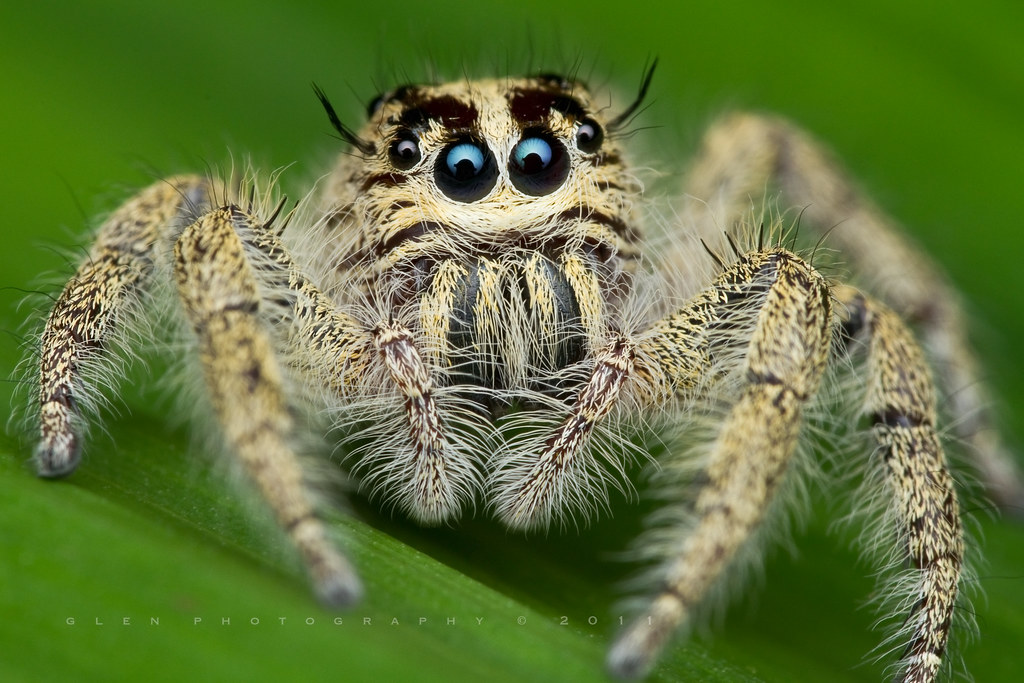
These dense networks of bristles are called scopulae and also help with capturing prey. Unlike mammal hair, which is made of keratin, tarantulas' hairs, called setae, are made of chitin, a derivative of glucose that also makes up the structure of a spider's exoskeleton. Before this latest research, Schaber knew the hairs were important for adhesion. He and his colleagues chose to study this in Cupiennius salei spiders. Often called tiger wandering spiders, they live in South and Central America.
Frontiers Science News
Immense Selection of Hair ExtensionsSome say that quality doesn’t go hand in hand with quantity. At the USA Hair™ store, you will find not only the largest selection of hair extensions, toppers, wigs, and accessories, but you can also rest assured that every product at our store is of the highest quality possible. Browse through hair extensions, toppers, and wigs for any occasion and style. From clip-in extensions to full-coverage toppers, USA Hair™ has got you covered.

USA Hair ™ = Exceptional Service and Unbeatable Advantages
These hairs help guide tarantulas in capturing or responding to escaping prey. In 1883, German zoologist Friedrich Dahl named these "hearing hairs" when he observed that they moved to the sound of a violin. At the end of a spider’s leg, coarse fibers splinter into smaller hairs.
All of these hairs represent first-order lever arms, whose deflection triggers nervous impulses in the sensory cells ending at their base. They respond to the frictional forces contained in the slightest movement of air. The large majority of the hairs, however, are much less sensitive.
Spidey senses
Doja Cat Dyed Her Hair Pink With an Outline of a Black Spider - Teen Vogue
Doja Cat Dyed Her Hair Pink With an Outline of a Black Spider.
Posted: Fri, 21 Jul 2023 07:00:00 GMT [source]
Determining how the hundreds, sometimes thousands, of arachnid "ears" work together to give a big relevant picture is next on the research team's list. Instead of one peak response to a single frequency, "these hairs operate at the physical limits of sensitivity across a much broader range of frequencies," Bathellier said. Researchers in the past thought each hair acted like those found in the cochlea of the human inner ear. In that organ, a forest of different lengths and thicknesses of hair breaks up incoming sound waves into discrete chunks, rather than picking up a wide range. Hunting spiders can not only watch your every move, but they can feel those moves, and that of their prey, through the air.
Dancing spiders inspired this biologist to teach others
Doja Cat Debuts Her Boldest Hair Transformation Yet With Spider Design - E! NEWS
Doja Cat Debuts Her Boldest Hair Transformation Yet With Spider Design.
Posted: Mon, 24 Jul 2023 07:00:00 GMT [source]
When people are hit by urticating hairs, they can cause redness, stinging and itching —and even blindness if they strike the eyes. The chemically sensitive hairs used for smell and taste are blunt and hollow. They also play a role in reproduction and help the tarantula look for a mate.
Orb weaver spider glue properties evolve faster than their glue genes, scientists find
It is not possible to upload .zip files or more than one picture per upload. If you have more than one picture of your spider sighting, please upload them separately and copy the description text including the location along with it. It is easiest for others or for us to identify your spider if the photograph is taken from the top of the spider.
Their physics-focused work suggests each hair acts like a single, independent ear – not a network of ear parts that, together, turn a spider's exoskeleton into one giant ear, as was previously assumed. Slit organs are also somehow involved in the spider's ability to 'memorise' directions, for example, the return route to its burrow after a hunting trip. Another stimulus to which spiders are incredibly sensitive is vibration. Vibrations transmitted through air, substrate surfaces and even water can be sensed by spiders.
Just how do spiders walk straight up—and even upside-down across—so many different types of surfaces? Now, a new study in Frontiers in Mechanical Engineering is the first to show that the characteristics of the hair-like structures that form the adhesive feet of one species—the wandering spider Cupiennius salei—are more variable than previously thought. The team believes that this variety may be key to how spiders can climb so many surface types. The feet of this species of spider are made up of close to 2,400 tiny hairs (one hundredth of one millimeter thick).
Spines are often more numerous and larger on the front legs. They assist in capturing and holding prey or in helping males hold females during mating. Air vibrations and currents are detected by slender, vertical hairs called trichobothria, usually found on the upper surface of the three outermost limb segments. These hairs are easily deflected and their 'ball and socket' basal hinge allows them to respond to air movements coming from any direction.




No comments:
Post a Comment